
Want to transform your AI data training career from a $5/hour micro-task grind to a $40-$80/hour specialist role? The secret lies in mastering hidden skills—beyond basic annotation—that top trainers use to stand out in this booming $3.2 billion industry (Upwork, 2025).
With 1.5 million annotators and trainers powering AI models like Grok, self-driving cars, and medical diagnostics in 2025 (McKinsey), and 5,878 remote jobs posted on Indeed in June, the opportunities are vast. This post unveils seven game-changing skills, from prompt engineering to bias detection, backed by real-world stories, hard data, and actionable tips to boost your efficiency and pay.
- 1.5 million annotators and trainers powering AI globally (McKinsey)
- 5,878 remote jobs posted on Indeed in June alone
- $3.2 billion industry with 25% annual growth
- 7 hidden skills that can boost your pay by 40%
Why Hidden Skills Matter in AI Data Training
AI data training—labeling images, ranking chatbot replies, or auditing datasets—is the backbone of artificial intelligence, with human-in-the-loop (HITL) roles projected to grow 25% annually through 2030 (Upwork, 2025). While basic annotation gets you started, mastering advanced skills like Python scripting or ethical moderation can increase your pay by 40% (Scale AI, 2025) and open doors to roles like quality assurance (QA) leads or domain specialists.
These skills enhance your precision, efficiency, and value, ensuring you thrive in a field where human judgment remains critical, boosting model performance by 20-30% (TED, 2024).
Success Story: Carlos's Python Breakthrough
Scale AICarlos, a Scale AI annotator from Mexico, learned basic Python to automate QA checks. In just six months, he jumped from $12/hour to a $30/hour QA role. "These skills changed everything," he shared on Reddit. "I went from doing repetitive tasks to designing quality control systems."
"Python scripting turned me from a worker into a problem-solver. Now I'm the one they call when they need efficiency improvements."
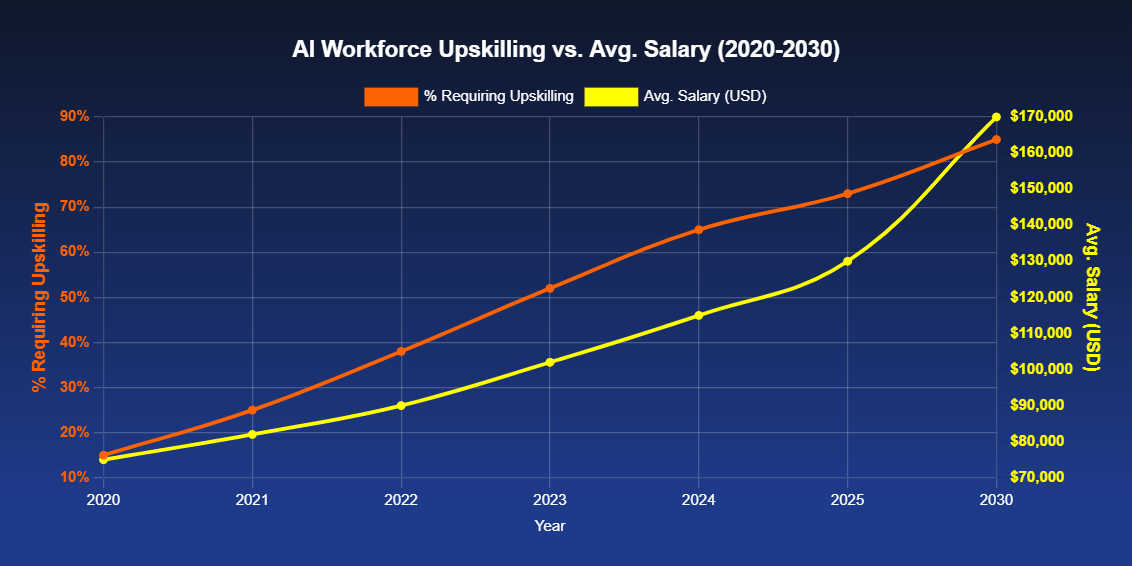
Hidden skills like Python or RLHF expertise lift pay from $5/hour to $40-$80/hour, per June 2025 data.
Data Point
A 2025 Glassdoor report shows U.S. AI trainers with specialized skills average $100,000+/year, compared to $57,540-$76,720 for entry-level annotators.
7 Hidden Skills to Skyrocket Your Career
Here are seven skills that top AI trainers leverage, with practical tips to master them and real-world examples of their impact:
1. Prompt Engineering
What It Is: Crafting precise input prompts to optimize AI outputs for accuracy, relevance, or safety.
Why It Matters: Well-engineered prompts reduce model errors by 18% in NLP tasks (Meta, 2025).
How to Learn: Practice writing varied prompts (e.g., "Explain quantum physics simply" vs. "Summarize quantum physics in 50 words"). Use free resources like OpenAI's prompt guide (online, 1 hour).
Real-World Impact: Elena's Prompt Mastery
Invisible TechnologiesElena, a prompt engineering specialist, designed prompts for a legal AI system, improving contract analysis accuracy by 15%. Her expertise earned her $40/hour at Invisible Technologies, where she now leads prompt optimization for enterprise clients.
"The right prompt can make the difference between a useful AI response and complete gibberish. It's like being a translator between human intent and AI capability."
Pro Tip
Test 3-5 prompt variations per task to uncover model weaknesses, boosting your value as an evaluator.
Resource: Coursera's "Prompt Engineering for Everyone" (free audit, 8 hours).
2. Bias Detection & Mitigation
What It Is: Identifying and correcting unfair patterns in datasets or AI outputs to ensure ethical results.
Why It Matters: Bias mitigation boosts user trust by 30% in applications like healthcare (IBM, 2024).
How to Learn: Study diverse datasets (e.g., SQuAD) to recognize bias (e.g., gender stereotypes). Take Kaggle's free "Ethics in AI" micro-course (4 hours).
Real-World Impact: David's Bias Detection
Scale AIDavid, an ethics specialist, re-labeled a hiring AI dataset to balance representation, cutting bias by 20% and earning $35/hour at Scale AI. His work directly improved the fairness of automated hiring systems used by Fortune 500 companies.
"Bias detection isn't just about finding problems—it's about building AI that serves everyone equally. That's worth premium pay."
Pro Tip
Flag potential biases (e.g., skewed sentiment labels) during QA to stand out for ethical moderation roles.
Resource: Google's "Responsible AI Practices" (free, online, 2 hours).
3. Basic Python Scripting
What It Is: Using Python to automate repetitive tasks like data cleaning or QA checks.
Why It Matters: Scripted annotators boost efficiency by 25% and earn 40% more (Upwork, 2025).
How to Learn: Complete Kaggle's free 6-hour "Python" course, focusing on pandas for CSV handling. Write a script to validate 100 labels in a dataset.
Real-World Impact: Sofia's Automation Success
RemotasksSofia, a Remotasks annotator, scripted QA checks and jumped to $18/hour after automating 20% of her tasks. Her Python skills allowed her to process 200 images per day instead of 150, significantly boosting her earnings.
"Python turned my 8-hour workday into a 6-hour workday while increasing my accuracy. It's like having a superpower."
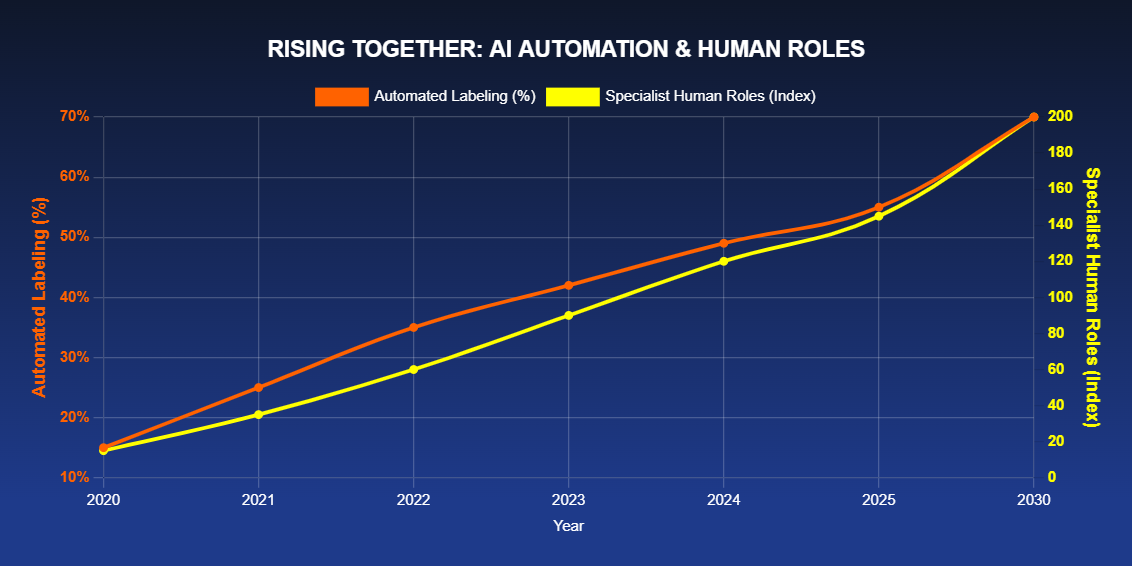
Sample Python script for validating labels, boosting efficiency by 25%, per 2025 annotator insights.
Pro Tip
Start with a simple script to flag duplicate labels, saving 1-2 seconds per task, per 2025 X tips.
4. RLHF (Reinforcement Learning from Human Feedback) Expertise
What It Is: Ranking AI outputs to align models with human values, safety, and quality.
Why It Matters: RLHF cuts harmful outputs by 30% in conversational AI (xAI, 2025).
How to Learn: Study RLHF rubrics on platforms like DataAnnotation.io. Practice ranking 50 chatbot replies using public datasets (e.g., Anthropic's HH-RLHF).
Real-World Impact: Marcus's RLHF Mastery
ClickworkerMarcus, a Clickworker evaluator, mastered RLHF and earned $25/hour evaluating chat safety, boosting model performance by 20%. His expertise in ranking AI responses helped train safer conversational AI systems.
"RLHF is about teaching AI to be helpful, harmless, and honest. It's the most important skill for the future of AI safety."
Pro Tip
Prioritize safety over coherence in rankings to align with platform goals, per 2025 Reddit advice.
Resource: OpenAI's RLHF overview (free, online, 1 hour).
5. Tool Proficiency (Labelbox, CVAT, Label Studio)
What It Is: Mastering annotation tools to increase speed and accuracy.
Why It Matters: Tool-proficient annotators complete 15% more tasks/hour (Scale AI, 2025).
How to Learn: Practice with free tools like Label Studio or CVAT on COCO datasets. Learn shortcuts (e.g., "B" for bounding box in Labelbox) via YouTube tutorials (2 hours).
Real-World Impact: Lisa's Tool Mastery
Scale AILisa, a Scale AI annotator, used CVAT shortcuts to label 200 images/day, earning $20/hour. Her tool proficiency made her one of the fastest annotators on the platform, leading to consistent high-volume projects.
"Learning tool shortcuts is like learning to type fast—it seems small, but it completely changes your productivity and earning potential."
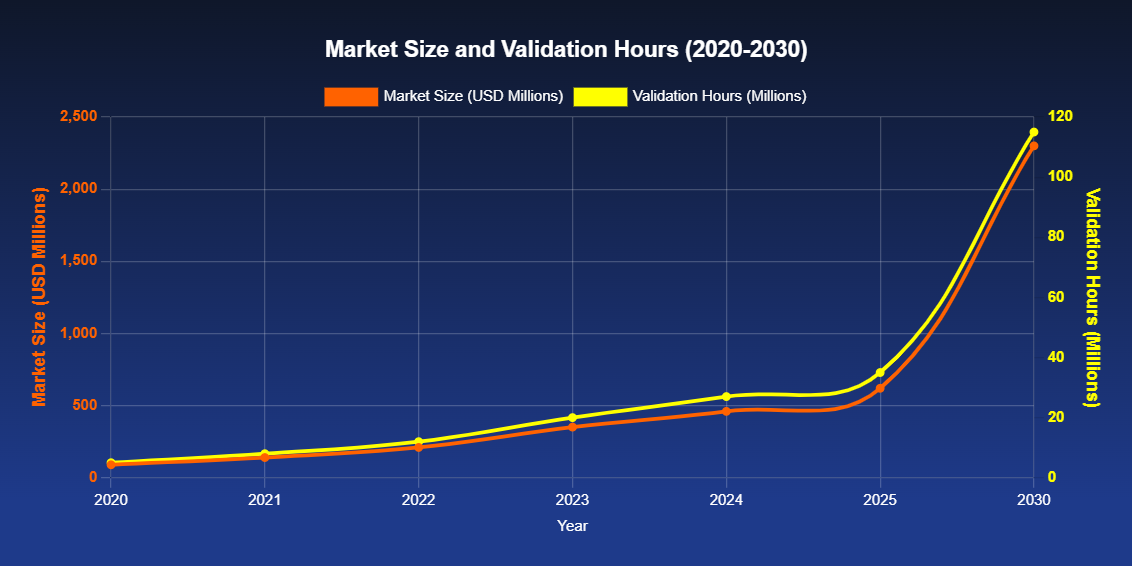
Sample cheat sheet for Labelbox shortcuts, speeding up annotation by 10%, per 2025 trends.
Pro Tip
Create a cheat sheet for 10 shortcuts per tool to cut task time by 10%, per 2025 X insights.
6. Domain Knowledge (Medical, Legal, Automotive)
What It Is: Specializing in niche fields to provide expert-level annotations or feedback.
Why It Matters: Domain specialists earn 50% more ($40-$80/hour, ZipRecruiter 2025).
How to Learn: Take free domain-specific courses (e.g., Coursera's "Medical Terminology," 10 hours) or earn certifications like Remotasks' LiDAR ($50, $18/hour).
Real-World Impact: Dr. Sarah's Medical Expertise
iMeritDr. Sarah, a retired radiologist, labeled 1,000 X-rays at iMerit, improving cancer detection by 7% and earning $50/hour. Her medical expertise made her annotations significantly more valuable than those from general annotators.
"My medical background isn't just a bonus—it's essential for accurate AI training in healthcare. The pay reflects the specialized knowledge required."
Pro Tip
Study 20 domain terms (e.g., "tumor" vs. "lesion") to qualify for high-pay projects, per Reddit tips.
Resource: Kaggle's "Medical Imaging Basics" (free, 4 hours).
7. Time Management & Mental Resilience
What It Is: Optimizing workflows and combating fatigue to maintain 95%+ accuracy.
Why It Matters: Fatigue reduces accuracy by 12% (Scale AI, 2025), risking task freezes.
How to Learn: Use Pomodoro (25-min sprints, 5-min breaks) and the 20-20-20 rule (every 20 minutes, look 20 feet away for 20 seconds). Practice mindfulness via free apps like Headspace (10-min sessions).
Real-World Impact: Alex's Productivity System
DataAnnotation.ioAlex, a DataAnnotation.io annotator, used Pomodoro to hit 97% accuracy, earning a $200 bonus and $30/hour. His systematic approach to time management made him one of the most reliable annotators on the platform.
"Mental resilience isn't about working harder—it's about working smarter. My accuracy bonus proves that quality beats quantity every time."
Pro Tip
Schedule 90-min work blocks with 10-min breaks to boost focus by 12%, per 2025 X tips.
Resource: Free Pomodoro apps like Focus To-Do (iOS/Android).
Your Skill-Building Toolkit
Here's a curated set of tools and resources to master these skills:
- Annotation Tools: Label Studio, CVAT, MakeSense.ai (all free) for practice on COCO, SQuAD, or LibriSpeech datasets.
- Learning Platforms: Kaggle (Python, ethics), Coursera (prompt engineering, medical), YouTube (tool tutorials).
- Tracking: Use Notion or Excel to log skill progress, accuracy (97%+ goal), and certifications.
- Networking: Join X (@AIJobsNow), Reddit (r/datascience), or LinkedIn AI groups for tips and job leads.
- Wellness: Headspace (free mindfulness) or Focus To-Do (Pomodoro) to combat fatigue.
Pro Tip
Download our free "AI Training Skill-Building Guide" to track your progress and access resource links. Find it in our Tools & Resources Hub.
Why These Skills Are Timeless
These skills—prompt engineering, bias detection, and resilience—are universal drivers of success in AI data training, remaining critical as platforms and models evolve. With 80% of AI models needing HITL through 2030 (Gartner, 2025), your expertise will stay in demand.
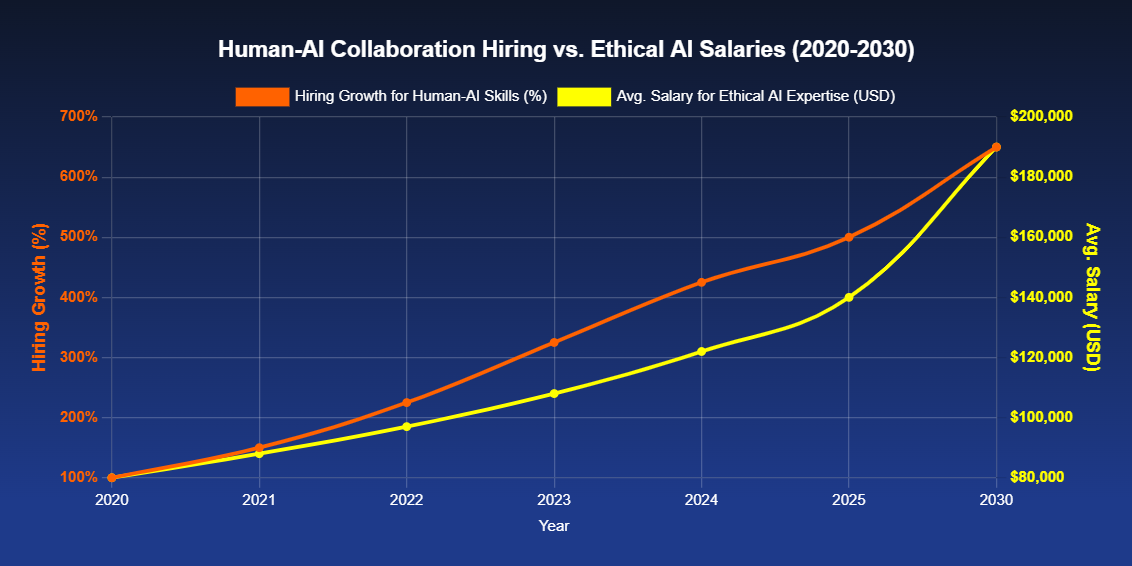
From basic annotation to $40-$80/hour specialist roles, these skills pave the way, per June 2025 data.
Success Stories to Inspire You
Meet three annotators who skyrocketed their careers with these skills (anonymized from X/Reddit, 2025):
Data Point
A 2025 Kaggle dataset shows annotators with advanced skills earn 50% more within 6 months.
Get Started Today
Ready to master these skills? Take these first steps:
- Today: Start Kaggle's 6-hour Python course (free) and write a simple script.
- Tomorrow: Practice 10 annotations on Label Studio, using 5 shortcuts.
- This Week: Join our X community (@AIJobsNow) for skill tips and job alerts.
Final Story: Sam's Transformation
Scale AISam, a Kenyan Scale AI annotator, learned prompt engineering, hitting $20/hour evaluating chatbots. "These skills gave me a future," he shared on X. "I went from struggling to make ends meet to supporting my family comfortably."
"Which skill will you master first? Share below—we'll guide you!"
Ready to Master These Skills?
Join thousands of successful AI trainers who started with a plan